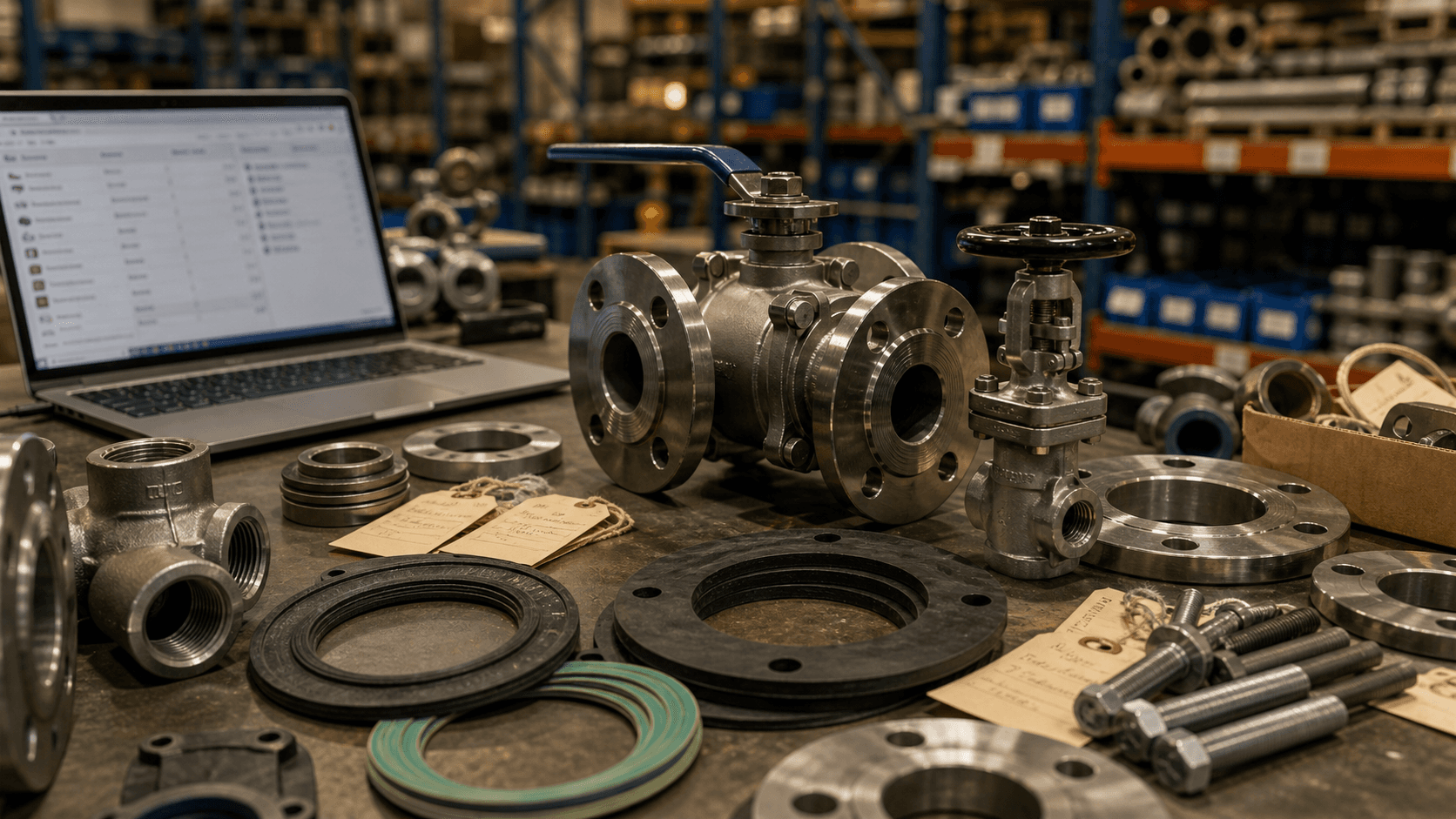
A beginner may ignore spares because they look too small. That is a mistake.
In industrial work, small parts can stop large systems. A gasket can delay a flange assembly. A valve can hold up a line repair. A wrong bolt grade can create safety and quality problems. A missing datasheet can stop procurement from approving what maintenance urgently needs.
The opportunity is not "I can buy parts." The opportunity is "I can help you source the right part with the right evidence."
Specifications are the sale
In consumer sales, you can sometimes sell from a picture. In technical spares, pictures are dangerous.
You need to ask for specifications:
- Size and pressure class.
- Material and standard.
- End connection.
- Temperature and service condition.
- Brand preference or approved alternatives.
- Datasheet, certificate, or compliance requirement.
- Required delivery date and site location.
When you ask these questions, you protect the buyer and yourself.
Why standards enter the conversation
Oil and gas buyers often care about standards because standards reduce ambiguity. API quality certifications, for example, are built around quality management for oil and natural gas industry manufacturers and service providers. ISO 29001 also focuses on quality management requirements for product and service supply organizations in petroleum, petrochemical, and natural gas industries.
You do not need to memorize every standard before starting. But you must learn that a valve, flange, gasket, or fitting is not only a price line. It may carry a standard, rating, certificate, and approval requirement.
The beginner's practical move
Build a spare-parts request form. Keep it simple:
Item name. Quantity. Size. Rating. Material. Standard. Application. Existing brand. Photo. Datasheet. Required certificate. Delivery location. Deadline.
That form makes you look organized. More importantly, it prevents expensive assumptions.
The Cookbook treats spares as a real service lane because many beginners can start here if they are careful. The money is not in guessing. The money is in being the person who slows down just enough to get the requirement right.